

Study Permit in Canada
At IPJ Immigration Solutions, we believe in empowering future leaders by helping them achieve their dreams of studying in Canada. With over 20 years of experience, our compassionate, woman-led team provides expert guidance to ensure a smooth and successful application process for your Study Permit, giving you the opportunity to study, grow, and build a brighter future in Canada.
What is a Study Permit Canada?
A study permit is an official document issued by Immigration, Refugees, and Citizenship Canada (IRCC) that allows international students to study at a Designated Learning Institution (DLI) in Canada. It’s important to note that a study permit is not a visa. A visa allows you to enter Canada, while the study permit allows you to study once you’re inside the country.
Study permits are required for most international students attending universities, colleges, or other post-secondary institutions in Canada. The permit is valid until program completion plus 90 days or until the expiration date on the permit, whichever comes first. Note: The 90-day grace period allows you to prepare to leave Canada or apply for a Post-Graduation Work Permit (PGWP) or extend your stay.
Who Needs a Study Permit?
To study in Canada, international students generally need a study permit if their program lasts longer than 6 months. Here’s the breakdown:
Programs Longer Than 6 Months:
- A study permit is required for any program longer than 6 months at a Designated Learning Institution (DLI).
Programs 6 Months or Less:
- You don’t need a study permit for programs shorter than 6 months. However, obtaining a study permit can make it easier to extend your stay or transition to longer programs in the future.
Who Does Not Need a Study Permit:
- Minor children in preschool, primary, or secondary school when their parents hold valid Canadian work or study permits.
- Family members of foreign diplomats.
- Members of foreign armed forces from countries designated under the Visiting Forces Act.
- Students enrolled in programs 6 months or shorter.
Even if exempt, having a study permit offers greater flexibility for program changes or extensions.


Study Permit Eligibility Requirements
Acceptance from a Designated Learning Institution (DLI): Ensure you have an offer from an institution listed on the IRCC DLI list. Quebec students need a CAQ instead of a PAL.
Proof of Financial Support: Demonstrate sufficient funds to cover tuition, living expenses, and return transportation for yourself and any accompanying family members.
Health and Police Clearance: Submit medical exam results (if required) and police clearance certificates to show you have no criminal background.
Intent to Leave Canada: Prove to the immigration officer that you plan to return to your home country once your study permit expires, supported by ties to your home country and future plans.
Provincial Attestation Letter (PAL): What You Need to Know
A Provincial Attestation Letter (PAL) is a new requirement introduced in 2024. It’s issued by Canadian provinces or territories to confirm that an applicant’s study plans align with the province’s capacity for international students.
Who Needs a PAL:
- Most study permit applicants need a PAL before applying to IRCC.
Who Does Not Need a PAL:
- Master’s or PhD students.
- Elementary or secondary school students.
- Current study permit holders applying for renewals or extensions.
- Students enrolled in programs 6 months or shorter.
How to Obtain a PAL:
- Contact the province or territory where your Designated Learning Institution (DLI) is located. Most institutions assist students in obtaining their PAL during the enrollment process.
- The PAL must be submitted with your study permit application to IRCC. Applications without the required PAL will be refused.
Financial Requirements & Proof of Funds
To be eligible for a study permit, you must prove that you have enough money to cover your tuition fees, living expenses, and return transportation.
Living Expenses (Outside Quebec) – As of 2024:
- 1 person (student only): Tuition + $20,635 CAD for a 12-month period.
- 2 people: Tuition + $25,690 CAD.
- 3 people: Tuition + $31,583 CAD.
- 4 people: Tuition + $38,346 CAD.
- 5 people: Tuition + $43,492 CAD.
- 6 people: Tuition + $49,051 CAD.
- Each additional person: Tuition + $5,559 CAD.
Note: Living expense requirements are updated annually by IRCC. Check the IRCC website for the most current financial requirement amounts for your year of application.
Acceptable Proof of Funds: Canadian bank accounts, Guaranteed Investment Certificates (GICs), bank statements, or scholarship letters are all acceptable as proof of funds.
Required Documents for Study Permit Application
When applying for a study permit, you’ll need the following mandatory documents:
Letter of Acceptance from a Designated Learning Institution (DLI)
Provincial Attestation Letter (PAL) or Certificat d’acceptation du Québec (CAQ) (if applicable)
Valid Passport for yourself and any family members
Passport-sized Photos (two per person)
Proof of Financial Support, such as bank statements or sponsor letters
Conditional Documents (if applicable):
Police Clearance Certificates (if required)
Medical Exam Results (if applicable)
Marriage Certificate (for spouse)
Birth Certificates for dependent children
Custodianship Declaration (for minors traveling alone)
Study Permit Application Process
01.
Obtain Required Documents
Get a Letter of Acceptance from a Designated Learning Institution (DLI) and, if needed, a Provincial Attestation Letter (PAL) or Certificat d’acceptation du Québec (CAQ) (for Quebec students).
02.
Create IRCC Account
Set up an IRCC online account, fill out the study permit application forms, and upload all required documents.
03.
Pay Fees & Submit Application
Pay the application fee ($150 CAD) and biometrics fee ($85 CAD, if required), then review and submit your application online.
04.
Complete Biometrics & Medical Exam
If required, provide biometrics and undergo a medical exam (if applicable). After approval, receive a Letter of Introduction and obtain the study permit at the Port of Entry.
Processing Times & Costs
Processing Times:
Study permit processing times vary by country, ranging from 4 weeks to 20+ weeks.
For the latest estimates, check the IRCC website.
Student Direct Stream (SDS) is closed as of November 8, 2024. All applications now follow the standard process.
Government Fees:
Study Permit: $150 CAD
Biometrics: $85 CAD
TRV (if required): $100 CAD
Spouse Work Permit: $155 CAD
Permit Extension: $150 CAD
Additional Costs:
Medical Exam: $200 to $500
Police Clearance: Free to $100
Passport Photos: $15 to $30
Translation: Varies
Courier/Shipping: $50 to $100
Why Choose IPJ Immigration for Your Study Permit?
Personalized Solutions
Every student’s situation is different. Whether you are applying for your first study permit or extending an existing one, we provide tailored advice to meet your specific needs and ensure a smooth process for studying in Canada.
Comprehensive Support
From gathering the necessary documents to submitting your application, we guide you through every step of the process. Our support helps minimize the risk of delays or refusals, ensuring that your study permit application is complete and accurate.
Expert Guidance
We help you understand the eligibility criteria for obtaining a study permit, including the necessary proof of acceptance from a Designated Learning Institution (DLI), proof of sufficient financial resources, and more.
Clear Communication
We prioritize open communication throughout the application process. You will always know what to expect, what documents are required, and the timelines for your study permit application.
Proven Success
With years of experience and a proven track record, we are confident in our ability to help you secure your study permit and begin your academic journey in Canada.
Quick Processing
We don’t stop at submission. Our team offers continuous support throughout the process, from tracking your application status to addressing any concerns, ensuring a smooth path to Study permit in Canada.
Hear from our previous clients
Every application represents someone’s hopes, dreams, and future. Here are just a few of the people we’ve been honored to help.
Posted onTrustindex verifies that the original source of the review is Google. Nasz proces w staraniu sie o pobyt staly byl dlugi i skomplikowany,ale zakonczyl sie pomyslnie.To wszystko wlasnie dzieki pomocy i pracy pani Ireny i jej zespolowi.Bardzo dziekujemy i polecamy.Posted onTrustindex verifies that the original source of the review is Google. 😊MY REVIEW: ⭐️⭐️⭐️⭐️⭐️ /5 for IPJ IMMIGRATION SOLUTIONS and Ms. IRENA BARTOSZEWICZ — God bless you! 🙏🤝🏻 You practically saved my life 😊🙏! I was OUT OF STATUS for 12 years… and in just 18 months, I became a PERMANENT RESIDENT 😊🥳. I could’ve achieved it in 8 months, but IRCC was backlogged with applications. She’s my first and BEST immigration consultant in Canada — I highly recommend her. I wouldn’t trade her for anyone in my entire life!! 😁👋👋👋👋......................POLISH TRANSLATION: MOJA OPINIA: ⭐️⭐️⭐️⭐️⭐️ /5 dla IPJ IMMIGRATION SOLUTIONS i pani IRENY BARTOSZEWICZ — Niech Bóg Wam błogosławi! 🙏🤝🏻 Dosłownie uratowaliście mi życie 😊🙏! Przez 12 lat byłem BEZ STATUSU… a w ciągu zaledwie 18 miesięcy zostałem STAŁYM REZYDENTEM 😊🥳. Mogłem to osiągnąć już w 8 miesięcy, ale IRCC miało opóźnienia w rozpatrywaniu wniosków. To moja pierwsza i NAJLEPSZA konsultantka imigracyjna w Kanadzie — gorąco ją polecam. Nie zamieniłbym jej na nikogo przez całe życie!! 😁👋👋👋👋Posted onTrustindex verifies that the original source of the review is Google. Fantastic experience with IPJ Immigration Solutions. Their guidance made our PR application straightforward and completely stress-free. We never had to worry about missing a document or making a mistake — Ms. Irena guided us through every step and made sure everything was perfectly taken care of down to the last detail. I received my PR within just seven months from submitting the application to the government. Highly recommend!Posted onTrustindex verifies that the original source of the review is Google. Really happy with the service we got from IPJ Immigration Solutions. They were clear and always kept us updated, which made the whole process way less stressful than we expected. Irena and Paulina were professional, knowledgeable and always ready to answer our questions. Glad we went with them-would recommend if you're looking for Immigration help. Thank you again to the team!Posted onTrustindex verifies that the original source of the review is Google. Amazing experience. Always on time, always in touch. Thank you for everything.Posted onTrustindex verifies that the original source of the review is Google. Jestem bardzo zadowolony z ich serwisu dziękuję bardzoPosted onTrustindex verifies that the original source of the review is Google. Excellent service. Very professional, knowledgeable, and reliable. She guided me through the process clearly and efficiently, and I felt fully supported the entire time. Highly recommend.
Meet Our Experienced Team
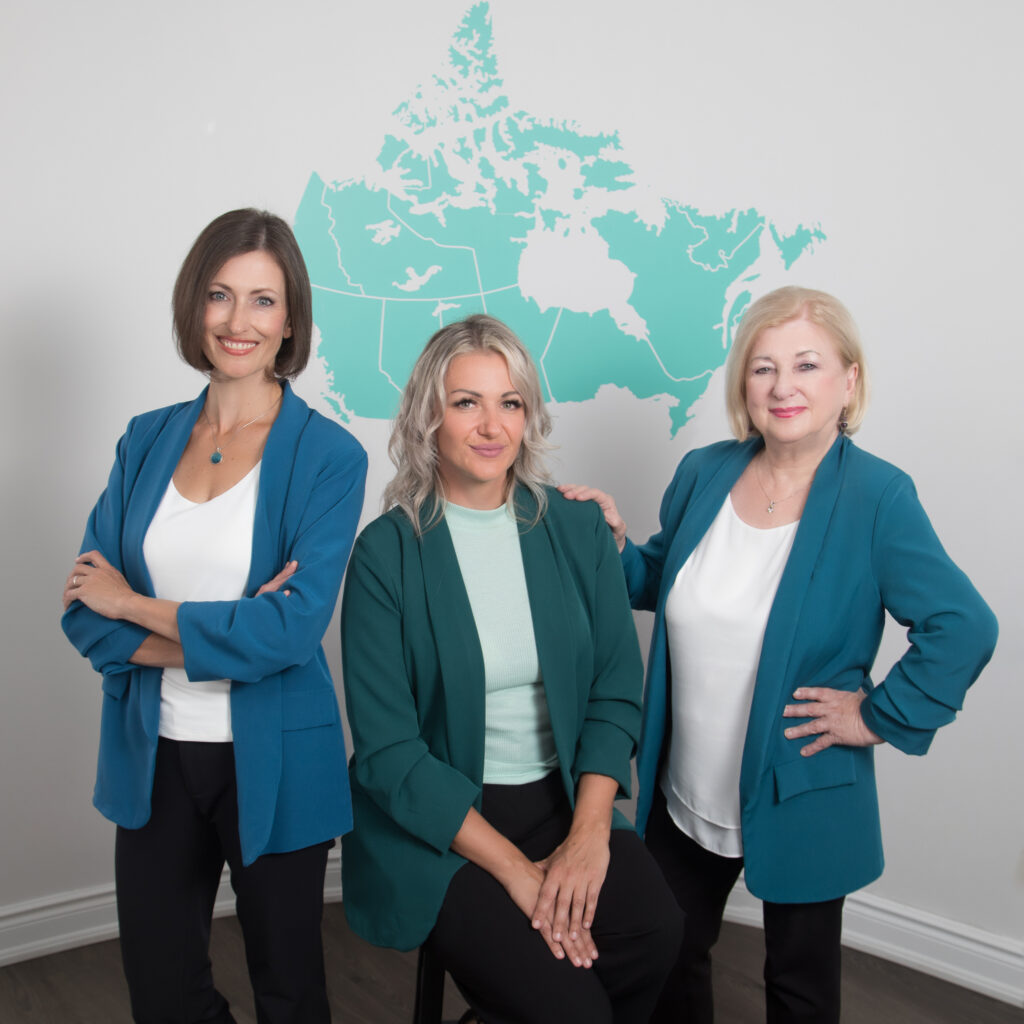
A women-owned, family-run practice where your case receives personal attention from experienced professionals who genuinely care.
Immigration law is our profession, but helping people navigate life-changing journeys is our passion. We’re a small, dedicated team, which means you’re not just another file number. We remember your story, we follow your progress, and we celebrate your success as if it were our own.
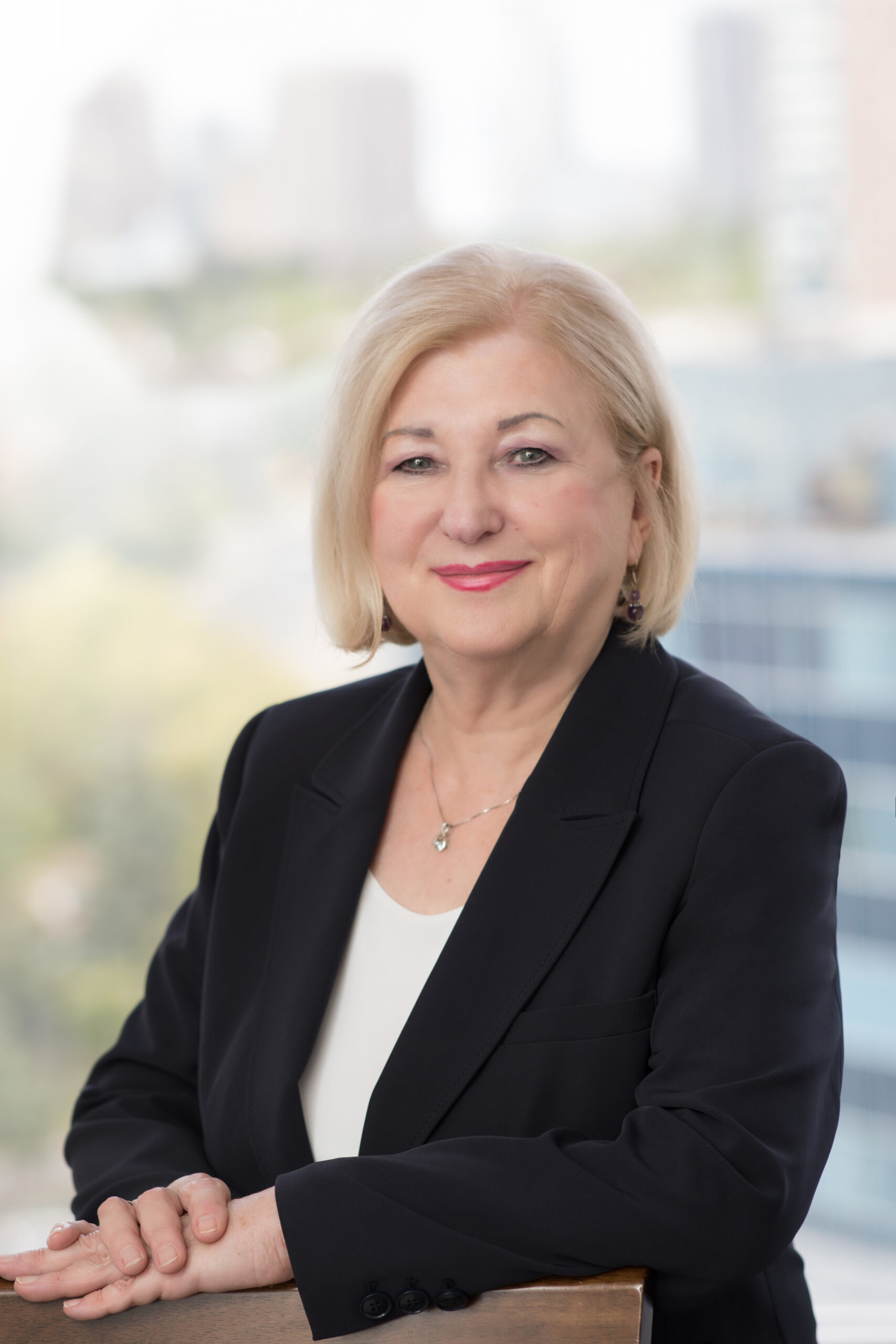
Irena Bartoszewicz Szajna
Senior Regulated Canadian Immigration Consultant (RCIC)
Irena Bartoszewicz Szajna
Senior Regulated Canadian Immigration Consultant (RCIC)

Paulina Harirbafan
Immigration Lawyer / Notary Public
Paulina Harirbafan
Immigration Lawyer / Notary Public

Justyna Szajna
Regulated Canadian Immigration Consultant (RCIC)
Justyna Szajna
Regulated Canadian Immigration Consultant (RCIC)
Frequently Asked Questions
These are some of the concerns clients bring to us. If you’re feeling any of these worries, we can help.
Processing times for study permits typically range from 4 to 16 weeks, depending on the country of application. You can check IRCC's website for current processing times for your country.
The SDS was a fast-track program for students from certain countries (like India, China, Philippines). However, SDS closed permanently in November 2024. All study permit applications now go through the standard process.
Yes, spouses and common-law partners of international students can apply for open work permits. Dependent children of study permit holders can attend Canadian elementary and secondary schools without needing a study permit.
A PGWP allows international students to work for any employer in Canada for up to three years after graduation. Eligibility depends on the program and institution. This work experience can help you transition to permanent residency.
Yes, many graduates can apply for a Post-Graduation Work Permit (PGWP), which allows them to work in Canada and gain experience. This is a pathway to permanent residency through Express Entry or Provincial Nominee Programs (PNPs).
Still have questions? That's what consultations are for. Book a consultation and get clear, honest answers about your specific situation.
Your Immigration Journey Starts with a Conversation
You don’t have to navigate this alone. Book a consultation for clear, compassionate guidance tailored to your situation.
Whether you’re just starting to explore your options, facing a complex situation, or recovering from a refusal, we’re here to listen, understand, and guide you with the care your future deserves.
Why Book Your Consultation:
- We listen first before jumping into legal talk
- Honest answers to your situation
- Clear explanations in plain language
- No pressure, no sales tactics just helpful guidance
- 20+ years of experience with complex cases
- Women-owned practice bringing sensitivity and care
THIS ISN'T JUST PAPERWORK, IT'S YOUR LIFE, YOUR FAMILY, AND YOUR FUTURE. YOU DESERVE SOMEONE WHO UNDERSTANDS THAT.